- English
- 简体中文
- Esperanto
- Afrikaans
- Català
- שפה עברית
- Cymraeg
- Galego
- 繁体中文
- Latviešu
- icelandic
- ייִדיש
- беларускі
- Hrvatski
- Kreyòl ayisyen
- Shqiptar
- Malti
- lugha ya Kiswahili
- አማርኛ
- Bosanski
- Frysk
- ភាសាខ្មែរ
- ქართული
- ગુજરાતી
- Hausa
- Кыргыз тили
- ಕನ್ನಡ
- Corsa
- Kurdî
- മലയാളം
- Maori
- Монгол хэл
- Hmong
- IsiXhosa
- Zulu
- Punjabi
- پښتو
- Chichewa
- Samoa
- Sesotho
- සිංහල
- Gàidhlig
- Cebuano
- Somali
- Тоҷикӣ
- O'zbek
- Hawaiian
- سنڌي
- Shinra
- Հայերեն
- Igbo
- Sundanese
- Lëtzebuergesch
- Malagasy
- Yoruba
- Español
- Português
- русский
- Français
- 日本語
- Deutsch
- tiếng Việt
- Italiano
- Nederlands
- ภาษาไทย
- Polski
- 한국어
- Svenska
- magyar
- Malay
- বাংলা ভাষার
- Dansk
- Suomi
- हिन्दी
- Pilipino
- Türkçe
- Gaeilge
- العربية
- Indonesia
- Norsk
- تمل
- český
- ελληνικά
- український
- Javanese
- فارسی
- தமிழ்
- తెలుగు
- नेपाली
- Burmese
- български
- ລາວ
- Latine
- Қазақша
- Euskal
- Azərbaycan
- Slovenský jazyk
- Македонски
- Lietuvos
- Eesti Keel
- Română
- Slovenski
- मराठी
- Srpski језик

How Does a Variable Frequency Electric Motor Revolutionize Industrial Energy Efficiency?
🔍 Abstract
In modern industries, the Variable Frequency Electric Motor has emerged as a game-changer for process control and energy savings. Unlike fixed-speed motors, this technology allows dynamic adjustment of speed and torque to match real-time load demands. This guide dives deep into working principles, top advantages, application-specific performance, and how to select the right motor for pumps, fans, conveyors, and heavy machinery. Learn how Yinchi delivers robust solutions tailored to steel mills, cement plants, and power generation.
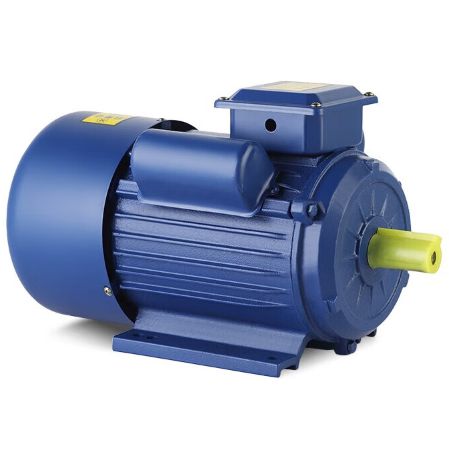
⚙️ Need a custom Variable Frequency Electric Motor for your steel mill, cement plant, or blower system?
In modern industries, the Variable Frequency Electric Motor has emerged as a game-changer for process control and energy savings. Unlike fixed-speed motors, this technology allows dynamic adjustment of speed and torque to match real-time load demands. This guide dives deep into working principles, top advantages, application-specific performance, and how to select the right motor for pumps, fans, conveyors, and heavy machinery. Learn how Yinchi delivers robust solutions tailored to steel mills, cement plants, and power generation.
📑 Contents
1. Core Working Principle of Variable Frequency Drive Technology
The Variable Frequency Electric Motor operates on the principle of adjusting the frequency and voltage supplied to the stator windings. By modifying the input AC frequency through a dedicated drive (VFD), the synchronous speed of the rotating magnetic field changes, directly altering rotor speed without mechanical gears. This precise electronic regulation eliminates energy-wasting throttling valves or dampers, especially in centrifugal loads such as fans and pumps. When paired with a Variable Frequency Electric Motor, modern converters use IGBT-based PWM technology to create near-sinusoidal waveforms, reducing harmonic distortion and improving torque linearity at low speeds.
Unlike traditional induction motors that run at fixed speeds close to line frequency (50/60 Hz), variable frequency operation allows soft-starting, reducing inrush current by up to 70% and extending mechanical lifetimes. The advanced control algorithms — V/f, vector control, or direct torque control — ensure that the Variable Frequency Electric Motor maintains stable torque even under sudden load variations. This is particularly crucial for hoisting equipment and rolling mills where shock loads occur frequently.
💡 Technical insight: Modern asynchronous variable frequency motors for applications like roots blowers or cement mills often incorporate independent cooling fans to prevent overheating at low speeds — a standard feature in Yinchi's designs.
2. 5 Major Advantages That Reduce Operational Costs
Adopting a Variable Frequency Electric Motor in your production line brings measurable financial and operational gains. Below are the top five benefits validated by real industrial deployments.
- Energy savings 20–60% — For variable torque loads (pumps, fans), affinity law shows power reduces with cube of speed; a 20% speed reduction saves nearly 50% energy.
- Precision process control — Allows smooth acceleration/deceleration ramps, preventing mechanical shocks and improving product quality (extruders, mixers).
- Reduced mechanical stress — Soft start eliminates belt slippage, gear wear, and coupling fatigue, extending component life by 30%.
- Power factor improvement — Operates near unity power factor, avoiding utility penalties and reducing cable losses.
- Lower maintenance costs — No need for hydraulic variable-speed devices or mechanical调速; simpler lubrication schedules and less downtime.
Yinchi manufactures high-quality torque and three-phase induction variable frequency motors specifically engineered for heavy-duty applications. Their custom control cabinets enable remote speed adjustments, integrating seamlessly with SCADA systems for Industry 4.0 readiness.
3. Key Industrial Applications: From Steel Mills to HVAC
The versatility of a Variable Frequency Electric Motor spans across dozens of sectors. The table below summarizes typical usage scenarios, motor types, and tangible outcomes.
| Industry / Application | Motor Type Preferred | Key Benefit Realized |
|---|---|---|
| Steel rolling mills & roller tables | Torque variable frequency motor | High overload capacity (200% torque at standstill) |
| Cement plants (crushers, conveyors) | Variable frequency asynchronous motor | Dust-resistant enclosure, constant torque at low speeds |
| Power plant ID/FD fans & pumps | Power plant VF asynchronous motor | Up to 35% energy reduction, grid-friendly operation |
| Roots blowers / compressors | Variable frequency motor for roots blower | Pressure stability, lower noise, reduced maintenance |
| Railway traction & elevators | High-starting torque VF motor | Regenerative braking capability, smooth ride comfort |
For each of these scenarios, Yinchi offers customized solutions with CE/ISO certifications, ensuring reliable operation even under extreme ambient temperatures or high humidity. Their technical team designs control cabinets tailored to your process — from simple keypad control to Profibus/Modbus integration.
4. Selection Criteria & Technical Parameters Table
Choosing the correct Variable Frequency Electric Motor requires assessing load type (constant torque, variable torque, or constant power), speed range, duty cycle, and environmental factors. Below are critical parameters to evaluate:
- Power rating — From 0.75 kW to 500+ kW (Yinchi offers up to 800kW for special orders).
- Speed control range — Typical 1:10 for standard motors, 1:100 for encoder-feedback closed loop.
- Enclosure protection — IP55 standard, IP65 for severe dust/water jets.
- Cooling method — Forced ventilation (IC416) for constant torque at low speed.
- Mounting arrangement — B3 foot, B5 flange, or B14 face mounting.
| Parameter | Standard Range (Yinchi motors) | Recommendation |
|---|---|---|
| Voltage / Frequency | 380-690V, 50/60Hz ±10% | Match VFD input voltage; avoid long motor cable >100m without filter. |
| Insulation Class | F (155°C) standard, H on request | Class F with temperature rise B for extended life. |
| Efficiency Class | IE3 / IE4 ready | IE4 reduces losses by extra 15% over IE2. |
| Bearing Type | Insulated bearing (NDE) for VFD use | Prevents shaft currents and premature bearing failure. |
Always consult with the manufacturer like Yinchi to simulate harmonic heating and ensure proper thermal margin. They also provide harmonic filters and dv/dt reactors for sensitive applications.
5. Installation, Safety & Maintenance Best Practices
To maximize lifespan of any Variable Frequency Electric Motor, follow these proven guidelines:
- Cable selection — Use shielded VFD cables, separate from power cables to avoid EMI.
- Grounding — Ensure low-impedance ground, star-point grounding to reduce common-mode noise.
- Thermal protection — Install PTC thermistors or KTY84 sensors inside windings for direct monitoring.
- Periodic inspection — Check bearing lubrication every 4000 hrs; measure insulation resistance yearly.
- Parameter backup — Save drive parameters before any maintenance action.
⚠️ Never run a VFD without a motor connected, and avoid frequent power cycling of the drive. Follow Yinchi's official commissioning checklist for first-time startup to prevent damage.
6. Frequently Asked Questions (FAQ)
❓ Can any standard induction motor be used with a VFD?
Not ideally. Standard motors lack insulation for voltage spikes and have poor low-speed cooling. Variable Frequency Electric Motor is designed with reinforced insulation, independent cooling fans, and robust bearings to handle inverter duty. Using a standard motor may lead to premature failure.
❓ How much energy can a VFD motor save in pump applications?
For centrifugal pumps, reducing speed by 20% cuts power consumption by nearly 50% (cube law). Real-world savings range 35-55% depending on duty cycle, making payback periods often less than 12 months.
❓ What is the typical lifespan of a variable frequency motor?
With proper installation, regular maintenance, and suitable ambient conditions, quality motors like Yinchi's exceed 20 years. Bearing replacement every 20,000–30,000 hours and periodic cleaning are essential.
❓ Are special cables required for VFD installations?
Yes. Use symmetrical shielded VFD cables with low capacitance to reduce reflected wave and electromagnetic interference. Yinchi provides cable recommendations per motor rating.
❓ Can a Variable Frequency Electric Motor be used in explosive atmospheres?
Absolutely, with appropriate EX certification (ATEX, IECEx). Yinchi manufactures explosion-proof variable frequency motors for Zone 1, Zone 2, and dust environments, featuring increased safety and flameproof enclosures.
Yinchi — a leading Chinese manufacturer — delivers factory-direct pricing, expert engineering support, and rapid global shipping. Contact us today for a tailored quote and free technical consultation.
📞 Request a Quote →