- English
- 简体中文
- Esperanto
- Afrikaans
- Català
- שפה עברית
- Cymraeg
- Galego
- 繁体中文
- Latviešu
- icelandic
- ייִדיש
- беларускі
- Hrvatski
- Kreyòl ayisyen
- Shqiptar
- Malti
- lugha ya Kiswahili
- አማርኛ
- Bosanski
- Frysk
- ភាសាខ្មែរ
- ქართული
- ગુજરાતી
- Hausa
- Кыргыз тили
- ಕನ್ನಡ
- Corsa
- Kurdî
- മലയാളം
- Maori
- Монгол хэл
- Hmong
- IsiXhosa
- Zulu
- Punjabi
- پښتو
- Chichewa
- Samoa
- Sesotho
- සිංහල
- Gàidhlig
- Cebuano
- Somali
- Тоҷикӣ
- O'zbek
- Hawaiian
- سنڌي
- Shinra
- Հայերեն
- Igbo
- Sundanese
- Lëtzebuergesch
- Malagasy
- Yoruba
- Español
- Português
- русский
- Français
- 日本語
- Deutsch
- tiếng Việt
- Italiano
- Nederlands
- ภาษาไทย
- Polski
- 한국어
- Svenska
- magyar
- Malay
- বাংলা ভাষার
- Dansk
- Suomi
- हिन्दी
- Pilipino
- Türkçe
- Gaeilge
- العربية
- Indonesia
- Norsk
- تمل
- český
- ελληνικά
- український
- Javanese
- فارسی
- தமிழ்
- తెలుగు
- नेपाली
- Burmese
- български
- ລາວ
- Latine
- Қазақша
- Euskal
- Azərbaycan
- Slovenský jazyk
- Македонски
- Lietuvos
- Eesti Keel
- Română
- Slovenski
- मराठी
- Srpski језик

What Should You Know Before Choosing a Roots Blower?
Article Summary
A Roots Blower is a positive displacement blower designed to deliver reliable airflow at a set pressure range—often in harsh, dusty, or continuous-duty environments. Buyers typically run into the same problems: “Why is the blower so loud?”, “Why is it overheating?”, “Why is power consumption higher than expected?”, or “Why does the flow feel unstable?” This guide explains the real-world causes behind those pain points and provides practical steps for selection, installation, and maintenance. You’ll also find checklists, comparison tables, and an FAQ to help you choose confidently and keep the system running smoothly.
Table of Contents
- Outline
- Roots Blower Basics (Without the Jargon)
- Top Customer Pain Points and the Real Fixes
- How to Select the Right Roots Blower
- Installation and System Design Tips That Prevent Failures
- Maintenance That Actually Extends Service Life
- Roots Blower vs Other Blower Types
- FAQ
Outline
- Explain what a Roots Blower does and where it fits best
- Break down common problems (noise, heat, vibration, high energy use)
- Offer selection rules (airflow, pressure, gas conditions, duty cycle)
- Share system design and installation practices to avoid downtime
- Provide maintenance intervals and troubleshooting cues
- Compare alternative blower technologies for smarter purchasing decisions
Roots Blower Basics (Without the Jargon)
A Roots Blower moves air (or gas) by trapping a fixed volume and pushing it from inlet to outlet as the rotors rotate. That “fixed volume per rotation” behavior is why it is valued for stable, dependable airflow—especially for processes that run continuously or operate in messy industrial environments.
However, a Roots Blower does not “create pressure” the way people sometimes imagine. The pressure rise mostly comes from system resistance: pipe length, filters, silencers, valves, submerged aeration, clogged diffusers, and other restrictions. If the system pressure rises, the blower works harder and draws more power. This is the key to avoiding unpleasant surprises: you’re not just buying a machine—you’re buying how it behaves inside your system.
For many industrial users, a Roots Blower becomes the workhorse behind:
- Wastewater aeration (fine bubble or coarse bubble systems)
- Pneumatic conveying for powders and granules
- Vacuum and suction handling (when configured for vacuum duty)
- Desulfurization, oxidation, and other process air delivery
- Combustion support and general industrial air boosting
Top Customer Pain Points and the Real Fixes
Pain Point 1: “The blower is too loud.”
Roots Blowers are known for pulsation and mechanical noise. If you hear a sharp, harsh tone, the most common causes are insufficient inlet/outlet silencing, poor foundation isolation, or a piping layout that amplifies vibration (think: long unsupported runs acting like a speaker).
- Fix: Use properly sized inlet and outlet silencers, add flexible connectors, and support piping to prevent resonance.
- Fix: Check alignment and belt tension (over-tight belts can increase noise and bearing load).
- Fix: Avoid sudden elbows right at the outlet; give airflow a short straight run if possible.
Pain Point 2: “It overheats or trips.”
Overheating usually points to excessive discharge pressure (system restriction), poor ventilation, or incorrect operating range. A blower can run “fine” at startup, then overheat when filters load up or diffusers foul.
- Fix: Verify actual operating pressure under full process conditions (dirty filters, worst-case flow paths).
- Fix: Ensure adequate cooling air around the blower and motor; heat buildup is often underestimated in small rooms.
- Fix: Confirm relief valve settings and confirm they are functional, not stuck or undersized.
Pain Point 3: “Energy cost is higher than expected.”
Power consumption rises with pressure and with unnecessary airflow. Many systems oversize blowers “just in case,” then throttle flow with valves—this forces the blower to work harder while delivering no extra value.
- Fix: Size for the real airflow requirement and pressure range, not a vague “bigger is safer.”
- Fix: Consider variable speed control when demand changes over time.
- Fix: Reduce pressure losses: clean filters, correct pipe diameter, minimize sharp restrictions.
Pain Point 4: “Vibration keeps showing up.”
Vibration can come from misalignment, unbalanced pulleys, unstable foundations, or piping forces pulling on the blower casing. Left untreated, vibration can shorten bearing life and create seal leaks.
- Fix: Use a rigid base and ensure the foundation is level and properly anchored.
- Fix: Add flexible connectors and properly support piping independently from the blower.
- Fix: Check coupling/belt alignment and inspect for worn bearings early.
Pain Point 5: “Airflow seems unstable.”
A Roots Blower delivers pulsating flow by nature. Instability becomes worse when the system includes long pipelines, poorly selected silencers, or fluctuating backpressure (for example, varying submerged depth in aeration).
- Fix: Use proper pulsation control components (silencers, dampers where appropriate).
- Fix: Confirm the blower operates in the recommended range for that model and speed.
How to Select the Right Roots Blower
Selection is easiest when you treat it like a process requirement, not a catalog choice. Gather the following inputs before you decide:
- Required airflow: minimum, normal, and peak (include seasonal/process variation)
- Operating pressure or vacuum: expected range, plus worst-case condition
- Gas conditions: temperature, humidity, dust, corrosiveness, and whether oil-free air is required
- Duty cycle: continuous operation, frequent starts/stops, or intermittent loads
- Site limits: noise limits, available footprint, ventilation, and maintenance access
If you’re choosing for wastewater aeration, remember that backpressure is not just “pipe loss.” It also includes diffuser resistance and water depth. If you’re choosing for conveying, material characteristics and line layout can swing the pressure requirement dramatically.
This quick checklist helps prevent the most expensive mistake: undersizing pressure capability or oversizing airflow.
| Selection Item | What to Confirm | Why It Matters |
|---|---|---|
| Airflow range | Min/normal/peak flow | Avoid wasting power or starving the process |
| Pressure/vacuum range | Worst-case operating condition | Prevents overheating and tripping |
| Temperature & dust | Inlet temperature and particulate level | Protects bearings, seals, and reduces wear |
| Noise requirement | On-site dB limits | Drives silencer choice and room design |
| Control method | Fixed speed vs variable speed | Lower operating cost when demand fluctuates |
When you work with a manufacturer that understands applications—not just specs—you reduce the risk of paying twice. Shandong Yinchi Environmental Protection Equipment Co., Ltd. focuses on practical Roots Blower configurations for real industrial conditions, where stable operation, maintainability, and process fit matter as much as nameplate numbers.
Installation and System Design Tips That Prevent Failures
Even a well-selected blower can perform poorly if the system design is sloppy. The good news: most issues are preventable with a few disciplined choices.
- Keep inlet air clean: Use appropriate filtration and place the intake away from dust sources.
- Protect against backflow: Check valves help prevent reverse rotation and shock loads.
- Include relief protection: A properly set relief valve is not optional; it’s your safety net.
- Support your piping: Do not let piping weight and thermal expansion pull on the blower.
- Plan maintenance access: Leave space for belt changes, oil checks (if applicable), and filter replacement.
One underrated factor is ventilation. A Roots Blower system dumps heat into the room. If the room is small and the air can’t escape, temperatures rise quickly and everything suffers: motor life, lubrication stability, and even operator comfort.
Maintenance That Actually Extends Service Life
Maintenance doesn’t have to be complicated, but it must be consistent. Instead of “wait until something sounds wrong,” use a simple schedule and watch for early signals.
| Task | Typical Interval | What You’re Looking For |
|---|---|---|
| Inspect inlet filter | Weekly (or more in dusty sites) | Clogging increases pressure and power draw |
| Check belt tension/alignment | Monthly | Too tight stresses bearings; too loose slips and heats |
| Listen for abnormal noise | Ongoing | Early warning of bearing wear or misalignment |
| Check fasteners and base | Quarterly | Loose mounts amplify vibration and fatigue |
| Inspect relief valve function | Quarterly | Stuck valves remove your pressure protection |
If you want one habit that pays off fast: track operating pressure. A creeping pressure trend often tells you a filter is plugging, a diffuser is fouling, or a line restriction is growing—days or weeks before failure.
Roots Blower vs Other Blower Types
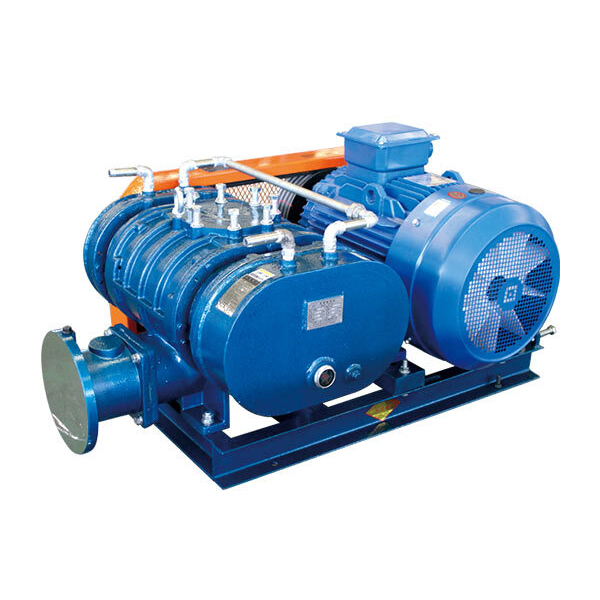
A Roots Blower isn’t always the “best,” but it’s often the most dependable fit when you need consistent airflow, tough construction, and predictable performance. Here’s a practical comparison:
| Type | Strengths | Tradeoffs | Best For |
|---|---|---|---|
| Roots Blower | Stable airflow, rugged, proven in harsh duty | Noise/pulsation, efficiency depends on pressure control | Aeration, conveying, continuous industrial duty |
| Screw Blower | Lower pulsation, often quieter, strong efficiency range | Higher initial cost, application fit matters | Energy-sensitive plants, noise-limited sites |
| Centrifugal Blower | High flow potential, smooth output | Performance drops off if conditions shift; can surge | Stable systems with predictable operating points |
If your demand varies a lot, prioritize control strategy and system pressure reduction first—those two decisions usually beat “just buying a different blower type.”
FAQ
Q: Can a Roots Blower provide oil-free air?
A: Many Roots Blower configurations deliver air without oil contact in the air path. The key is correct sealing design and proper maintenance so oil stays where it belongs (in the gearbox, not the process line).
Q: Why does my blower draw more power over time?
A: The most common reason is rising system pressure—clogged filters, fouled diffusers, added pipe restrictions, or a valve position change. Measuring discharge pressure regularly is the fastest way to confirm this.
Q: How do I reduce noise without sacrificing performance?
A: Use correctly sized silencers, flexible connectors, and a stable foundation. Noise is often a system problem (resonance and vibration transfer), not only a machine problem.
Q: What’s the biggest selection mistake buyers make?
A: Oversizing “for safety” and then throttling the system. It increases energy cost, raises operating temperature, and can cause unnecessary wear—while delivering no process benefit.
Q: Is a Roots Blower suitable for vacuum applications?
A: Yes, with correct configuration and protection. Vacuum duty requires attention to inlet filtration, temperature rise, and safe operating limits.
Q: How do I know if vibration is dangerous?
A: If vibration increases over time, appears suddenly after maintenance, or comes with rising bearing temperature/noise, treat it as urgent. It’s usually cheaper to correct alignment or piping stress early than to replace rotating components later.
Final Takeaway
A Roots Blower is a straightforward, reliable solution when you match it to the real airflow-and-pressure needs of your process and build the surrounding system correctly. If you want stable output, predictable maintenance, and equipment that can handle continuous-duty industrial conditions, your results will depend on two things: accurate selection inputs and disciplined installation details.
If you’re planning a new project or troubleshooting an existing system, contact us at Shandong Yinchi Environmental Protection Equipment Co., Ltd. for application-based recommendations and Roots Blower configurations that fit your site conditions and operating goals.