- English
- 简体中文
- Esperanto
- Afrikaans
- Català
- שפה עברית
- Cymraeg
- Galego
- 繁体中文
- Latviešu
- icelandic
- ייִדיש
- беларускі
- Hrvatski
- Kreyòl ayisyen
- Shqiptar
- Malti
- lugha ya Kiswahili
- አማርኛ
- Bosanski
- Frysk
- ភាសាខ្មែរ
- ქართული
- ગુજરાતી
- Hausa
- Кыргыз тили
- ಕನ್ನಡ
- Corsa
- Kurdî
- മലയാളം
- Maori
- Монгол хэл
- Hmong
- IsiXhosa
- Zulu
- Punjabi
- پښتو
- Chichewa
- Samoa
- Sesotho
- සිංහල
- Gàidhlig
- Cebuano
- Somali
- Тоҷикӣ
- O'zbek
- Hawaiian
- سنڌي
- Shinra
- Հայերեն
- Igbo
- Sundanese
- Lëtzebuergesch
- Malagasy
- Yoruba
- Español
- Português
- русский
- Français
- 日本語
- Deutsch
- tiếng Việt
- Italiano
- Nederlands
- ภาษาไทย
- Polski
- 한국어
- Svenska
- magyar
- Malay
- বাংলা ভাষার
- Dansk
- Suomi
- हिन्दी
- Pilipino
- Türkçe
- Gaeilge
- العربية
- Indonesia
- Norsk
- تمل
- český
- ελληνικά
- український
- Javanese
- فارسی
- தமிழ்
- తెలుగు
- नेपाली
- Burmese
- български
- ລາວ
- Latine
- Қазақша
- Euskal
- Azərbaycan
- Slovenský jazyk
- Македонски
- Lietuvos
- Eesti Keel
- Română
- Slovenski
- मराठी
- Srpski језик

How Does a Positive Pressure Roots Blower Solve Tough Air and Gas Delivery Problems?
In many plants, “air” looks simple on paper—until production starts. You may see unstable airflow, rising power bills, noisy equipment, or frequent maintenance that keeps interrupting your process. A Positive Pressure Roots Blower is often the practical answer when you need steady, controllable flow at low-to-medium pressure—especially for wastewater aeration, pneumatic conveying, combustion air, and industrial ventilation.
This guide breaks down how a Positive Pressure Roots Blower works, the common pain points it fixes, how to size it correctly, and what to look for in installation and upkeep. Along the way, we’ll share selection checklists and troubleshooting tips you can apply immediately. The recommendations here reflect the kind of field-proven thinking manufacturers like Shandong Yinchi Environmental Protection Equipment Co., Ltd. build into their blower solutions—reliability first, numbers second, and easy maintenance always.
Article Abstract
A Positive Pressure Roots Blower is a robust, positive-displacement machine designed to deliver consistent airflow despite changing backpressure. If your process suffers from airflow fluctuation, energy waste from poor sizing, excessive noise, dust carryover, or frequent seal and filter issues, this article shows how to identify the root cause and choose a configuration that stays stable in real operating conditions. You’ll learn key sizing terms, installation best practices, a maintenance rhythm that prevents surprises, and a concise FAQ to clear up common misunderstandings.
Table of Contents
- Outline at a Glance
- What a Positive Pressure Roots Blower Is
- Customer Pain Points and What Actually Causes Them
- How to Select the Right Positive Pressure Roots Blower
- Installation Details That Protect Your ROI
- Maintenance That Prevents “Mystery Failures”
- Quick Troubleshooting Checklist
- FAQ
Outline at a Glance
- Explain what a Positive Pressure Roots Blower does (and what it doesn’t do).
- Map real-world pain points to the mechanical or system-level cause.
- Walk through sizing: flow, pressure, temperature, duty cycle, and gas cleanliness.
- Cover installation: filtration, piping losses, relief protection, and noise control.
- Share a maintenance routine and practical troubleshooting steps.
- Answer the questions buyers ask right before they commit.
What a Positive Pressure Roots Blower Is
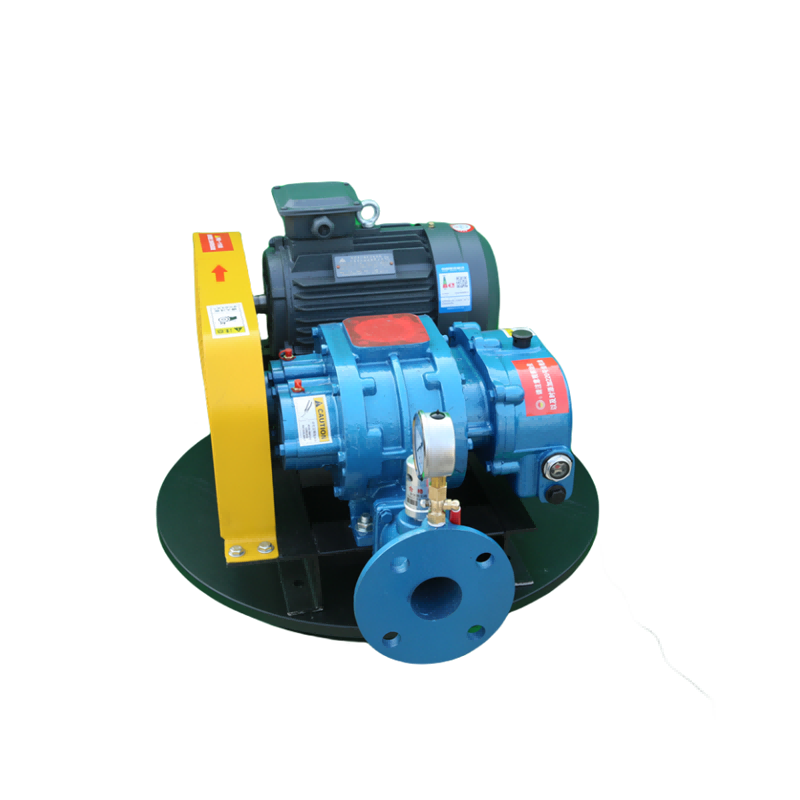
A Positive Pressure Roots Blower is a positive-displacement blower. Instead of relying on high-speed impellers to “create pressure,” it moves a fixed volume of air (or gas) per rotation using two synchronized rotors. That’s why it’s trusted in applications where stable flow matters more than peak pressure.
In simple terms: it “packages” air into pockets and pushes those pockets into your pipeline. The pressure you see is largely the result of system resistance—pipe length, bends, filters, diffusers, valves, and the process itself. When resistance rises, the blower still tries to deliver volume, and the system pressure climbs accordingly.
- Best for: steady airflow, continuous duty, low-to-medium pressure delivery, variable loads.
- Not ideal for: very high pressure ratios or highly compressible heat-sensitive processes that require multi-stage compression.
- Where it shines: you want predictable output and straightforward maintenance.
Customer Pain Points and What Actually Causes Them
Most blower complaints sound like “the machine is the problem,” but in practice, many issues come from the system around it. Here’s a clear mapping from symptom to cause to fix:
| Pain Point | Likely Root Cause | Practical Fix |
|---|---|---|
| Airflow seems unstable | Backpressure changes, undersized piping, clogged filter, poor control strategy | Check pressure losses, stabilize control valve/VFD logic, upgrade filtration and piping |
| Power bill is higher than expected | Oversized blower running throttled, high differential pressure, excessive leakage | Right-size capacity, reduce system resistance, improve sealing, use efficient drive setup |
| Noise and vibration complaints | Poor base alignment, pulsation, inadequate silencing, resonance in piping | Rigid foundation, correct alignment, add silencers/isolators, adjust piping supports |
| Frequent seal or bearing issues | Dust ingestion, overheating, oil quality problems, misalignment | Improve inlet protection, verify operating temperature, standardize lubrication schedule |
| Conveying line plugs or product breaks | Wrong air-to-material ratio, sudden pressure spikes, unstable feed | Tune conveying parameters, smooth pulsation, stabilize feeder, consider control upgrades |
The big takeaway: a Positive Pressure Roots Blower is usually chosen because it tolerates load changes without “hunting” or collapsing in output. If your process has unpredictable resistance (filters loading up, diffusers aging, valves opening/closing), you want a blower that stays calm and consistent.
How to Select the Right Positive Pressure Roots Blower
Sizing is where projects quietly win or lose. If you size only by “required flow,” you’ll often end up with a blower that is either constantly throttled (wasting energy) or constantly struggling (wearing faster). Use this selection approach instead:
- Step 1: Define the real flow range. Don’t just list a single number—define minimum, normal, and peak demand.
- Step 2: Estimate total system pressure loss. Include filters, piping, bends, silencers, valves, diffusers/nozzles, and process resistance.
- Step 3: Check gas conditions. Temperature, humidity, dust level, and whether the gas is clean air or a special gas mixture.
- Step 4: Confirm duty cycle. Continuous 24/7 duty needs different protection and thermal margin than intermittent use.
- Step 5: Decide the control method. On/off control is simplest; variable speed control is often best for wide ranges.
Here’s a compact checklist you can send internally before you request a quotation:
| Parameter | What to Provide | Why It Matters |
|---|---|---|
| Flow requirement | Min/normal/peak flow range | Prevents oversizing and throttling losses |
| Operating pressure | Expected pressure + worst-case pressure | Ensures motor and protection devices are correct |
| Gas quality | Dust level, moisture, special gases | Determines filtration and sealing strategy |
| Ambient conditions | Site temperature, altitude, ventilation | Affects cooling and safe operating margin |
| Control preference | Fixed speed, variable speed, or valve control | Impacts efficiency, stability, and noise profile |
If you’re unsure about your pressure estimate, a practical rule is to treat it like a “budget” and list every component that consumes pressure. Your supplier can help refine it, but the more realistic your system picture is, the more accurate (and cost-effective) your blower selection will be.
Installation Details That Protect Your ROI
A Positive Pressure Roots Blower can run for years with minimal drama—if you install it like you expect it to last. Most “early failures” come from dust ingestion, misalignment, overheating, or missing protection devices.
- Use proper inlet filtration. If your environment is dusty, an upgraded filter saves bearings, seals, and downtime.
- Keep piping losses reasonable. Too many sharp elbows or undersized pipe quietly forces higher operating pressure.
- Install relief protection. A reliable relief valve (or equivalent protection) prevents damage when downstream blocks or valves close unexpectedly.
- Plan for noise control. Silencers, flexible connectors, and vibration isolators reduce complaints and extend component life.
- Ensure base rigidity and alignment. A stable foundation and correct coupling alignment reduce heat and vibration over the long run.
If your process is sensitive—like aeration basins where oxygen transfer matters—stable airflow is your real product. In that case, “cheap installation” is rarely cheap for long.
Maintenance That Prevents “Mystery Failures”
Good maintenance for a Positive Pressure Roots Blower is less about doing a lot, and more about doing the right few things consistently. Most plants succeed with a simple rhythm:
- Daily/Weekly: check inlet filter condition, listen for new noise, confirm operating pressure stays in expected range.
- Monthly: inspect belts/couplings (depending on drive style), verify fasteners, look for air leaks and unusual vibration.
- Quarterly: review lubrication condition and level, clean external cooling surfaces, verify safety devices and gauges.
- Annually: comprehensive inspection during planned shutdown; replace wear parts based on real condition, not panic.
If you want the most practical KPI, track operating pressure at a fixed flow. When that pressure rises over time, it often signals increasing resistance (clogging, diffuser aging, pipe buildup). Fixing resistance early usually saves more energy than any “efficiency upgrade” you could buy later.
Quick Troubleshooting Checklist
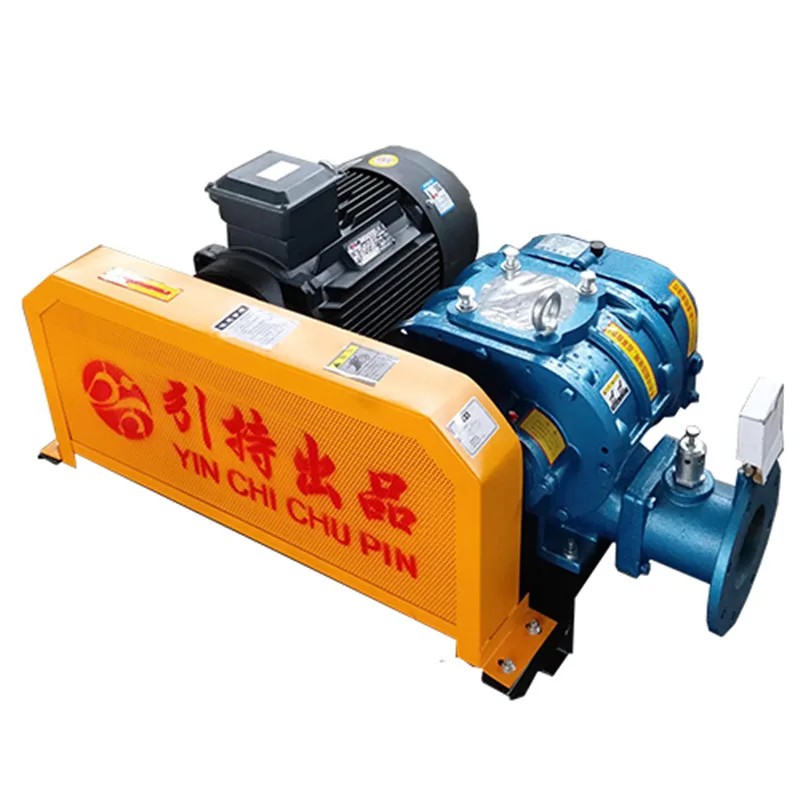
When something feels off, you don’t need to guess. Use this short checklist to narrow the cause quickly:
- Verify inlet filter and inlet path. A partially clogged filter can mimic “blower weakness.”
- Check operating pressure versus your normal baseline. Higher pressure usually means higher downstream resistance.
- Inspect for leaks. Leaks waste power and reduce delivered flow where it matters.
- Listen and feel. New metallic sounds, sharp vibration, or sudden heat increases should trigger an immediate inspection.
- Confirm control behavior. If a valve or speed controller is oscillating, airflow will look unstable even if the blower is fine.
A stable blower system is one where flow demand, pressure loss, and control logic agree with each other. If any one of those three is misaligned, the machine becomes the messenger that gets blamed.
FAQ
Q: Can a Positive Pressure Roots Blower handle changing backpressure without losing airflow?
A: In most industrial ranges, yes. Because it is positive-displacement, it tends to deliver stable volume across moderate pressure changes. If your pressure swings are extreme, you’ll want correct protection and a control method that keeps the operating point safe and efficient.
Q: What causes a Roots blower system to get louder over time?
A: Common causes include filter clogging (higher pressure), loosened supports, misalignment, worn isolation elements, or resonance in piping. The fastest win is usually checking inlet filtration and confirming your operating pressure hasn’t crept up.
Q: Is variable speed control always better?
A: Not always, but it’s often beneficial when your process demand changes a lot. For steady demand, a well-sized fixed-speed configuration can be extremely dependable and simple to maintain.
Q: How do I avoid oversizing a Positive Pressure Roots Blower?
A: Provide a real flow range (min/normal/peak), not just a single “maximum” number, and include worst-case pressure loss. Oversizing typically leads to throttling, which wastes power and can increase noise.
Q: What should I tell a supplier to get an accurate recommendation?
A: Share your flow range, expected and worst-case pressure, gas conditions (temperature, dust, moisture), duty cycle, and control preference. With those inputs, a manufacturer can propose a safer, more stable operating window instead of just a “catalog match.”
Choosing Confidence Over Guesswork
If you’ve been fighting airflow instability, unexpected maintenance, or energy waste, a well-selected Positive Pressure Roots Blower is one of the most direct ways to stabilize your operation. The key is treating the blower and the system as one combined package: right-size the flow, respect the real pressure losses, protect the inlet, and keep the control approach aligned with your demand pattern.
Shandong Yinchi Environmental Protection Equipment Co., Ltd. supports industrial users with blower solutions designed for consistent output, practical protection, and service-friendly layouts—so you spend less time troubleshooting and more time running.
Ready to match the right Positive Pressure Roots Blower to your application? Tell us your flow range, pressure conditions, and site details—then contact us for a configuration recommendation that fits your process, not just a spec sheet.