- English
- 简体中文
- Esperanto
- Afrikaans
- Català
- שפה עברית
- Cymraeg
- Galego
- 繁体中文
- Latviešu
- icelandic
- ייִדיש
- беларускі
- Hrvatski
- Kreyòl ayisyen
- Shqiptar
- Malti
- lugha ya Kiswahili
- አማርኛ
- Bosanski
- Frysk
- ភាសាខ្មែរ
- ქართული
- ગુજરાતી
- Hausa
- Кыргыз тили
- ಕನ್ನಡ
- Corsa
- Kurdî
- മലയാളം
- Maori
- Монгол хэл
- Hmong
- IsiXhosa
- Zulu
- Punjabi
- پښتو
- Chichewa
- Samoa
- Sesotho
- සිංහල
- Gàidhlig
- Cebuano
- Somali
- Тоҷикӣ
- O'zbek
- Hawaiian
- سنڌي
- Shinra
- Հայերեն
- Igbo
- Sundanese
- Lëtzebuergesch
- Malagasy
- Yoruba
- Español
- Português
- русский
- Français
- 日本語
- Deutsch
- tiếng Việt
- Italiano
- Nederlands
- ภาษาไทย
- Polski
- 한국어
- Svenska
- magyar
- Malay
- বাংলা ভাষার
- Dansk
- Suomi
- हिन्दी
- Pilipino
- Türkçe
- Gaeilge
- العربية
- Indonesia
- Norsk
- تمل
- český
- ελληνικά
- український
- Javanese
- فارسی
- தமிழ்
- తెలుగు
- नेपाली
- Burmese
- български
- ລາວ
- Latine
- Қазақша
- Euskal
- Azərbaycan
- Slovenský jazyk
- Македонски
- Lietuvos
- Eesti Keel
- Română
- Slovenski
- मराठी
- Srpski језик

How Do Roots Blowers Improve Aeration in Wastewater Treatment?
Roots blowers play an important role in wastewater treatment by supplying continuous, low-pressure air to aeration tanks. Their stable airflow supports dissolved oxygen control, biological treatment, and aerobic microorganism activity. In this article, we explain how three-lobe Roots Blowers work, which operating parameters matter when selecting an aeration blower, and how proper installation and maintenance affect long-term performance.
Table of Contents
- 1. Why Is Aeration Important in Wastewater Treatment?
- 2. How Does a Roots Blower Supply Air to Aeration Tanks?
- 3. Why Choose a Three-Lobe Roots Blower for Aeration?
- 4. How to Select the Right Roots Blower for a Wastewater Treatment Plant
- 5. Where Are Roots Blowers Used in Wastewater Treatment?
- 6. How Can Operators Maintain Stable Blower Performance?
- 7. Roots Blower Solutions from Yinchi
- 8. Frequently Asked Questions
1. Why Is Aeration Important in Wastewater Treatment?
In an activated sludge wastewater treatment process, aeration is not simply about adding air to water. It provides the oxygen that aerobic microorganisms need to break down organic pollutants. Without a reliable air supply, biological treatment efficiency can decline, dissolved oxygen levels may fluctuate, and the treatment system may struggle to maintain stable operation.
We consider the blower one of the key pieces of equipment in an aeration system because it directly affects the air volume delivered to the treatment tank. The air is usually distributed through submerged diffusers, which release bubbles into the wastewater. These bubbles transfer oxygen into the water and help maintain the conditions required for biological treatment.
For most conventional activated sludge systems, dissolved oxygen is commonly maintained around 1.5–2.5 mg/L, although the actual target depends on the treatment process, wastewater characteristics, tank depth, and operating conditions. Some facilities require higher or lower levels depending on their biological treatment objectives.
A properly selected Roots Blower provides the continuous airflow needed by these systems. However, sufficient airflow alone does not guarantee good aeration. Blower pressure, diffuser condition, pipeline resistance, and oxygen transfer efficiency must also be considered.
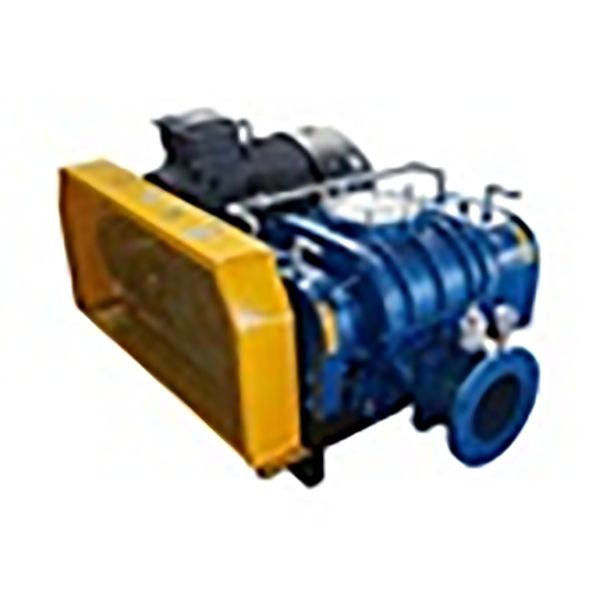
2. How Does a Roots Blower Supply Air to Aeration Tanks?
A Roots blower is a positive displacement machine. Its operating principle relies on two synchronized rotors rotating in opposite directions inside a housing. As the rotors turn, they trap air between the rotor surfaces and the casing, then carry this air from the inlet side to the discharge side.
In a three-lobe Roots blower, the two impellers maintain precise clearance without normally contacting each other. Synchronous timing gears keep the rotors correctly positioned during operation. This arrangement allows the blower to deliver a relatively steady volume of air with each revolution.
When the blower is connected to a wastewater aeration system, the operating process generally follows these steps:
- Air intake: Ambient air enters through the inlet filter, which helps prevent dust and particles from entering the blower chamber.
- Air transportation: The rotating impellers trap and transport air from the suction side toward the discharge port.
- Pressure generation: The blower supplies air against the resistance created by pipelines, diffusers, and the water depth in the aeration tank.
- Air distribution: Compressed air travels through the distribution pipeline and enters the submerged diffusers.
- Oxygen transfer: Air bubbles rise through the wastewater, allowing oxygen to transfer into the liquid for biological treatment.
One important technical point is that a Roots blower does not continuously compress air inside a sealed chamber in the same way as a conventional reciprocating compressor. It mainly transports a fixed volume of air, while pressure develops as the blower works against downstream system resistance.
This distinction matters when selecting equipment. If the diffuser system becomes clogged or pipeline resistance increases, discharge pressure may rise even though the blower speed remains unchanged. Operators should therefore monitor both airflow and discharge pressure rather than judging performance by motor operation alone.
3. Why Choose a Three-Lobe Roots Blower for Aeration?
Three-lobe Roots blowers are widely used in wastewater treatment because they can provide continuous airflow at relatively low discharge pressures. Their simple mechanical structure also makes them suitable for industrial facilities that require dependable operation over extended periods.
Stable Air Volume
The airflow of a positive displacement blower is closely related to rotor speed. Within its rated operating range, increasing rotational speed generally increases delivered air volume. This characteristic makes airflow adjustment relatively straightforward when the treatment plant needs to respond to changing oxygen demand.
Suitable for Low-Pressure Operation
Wastewater aeration systems commonly operate at relatively low pressures compared with many industrial compressed-air applications. The required pressure depends mainly on water depth, diffuser resistance, pipeline losses, and other system components. Roots blowers are designed for this type of low-pressure air delivery.
Compact Mechanical Structure
The blower consists of a housing, two rotors, timing gears, bearings, and associated drive components. Compared with more complicated compression equipment, this structure makes routine inspection and maintenance relatively manageable.
Flexible Integration
Roots blowers can be integrated with air filters, motors, silencers, pressure gauges, check valves, and pipeline systems. Depending on the project, variable-frequency drives can also be used to adjust blower speed and match air supply with changing treatment loads.
It is worth noting that a three-lobe design does not automatically guarantee lower energy consumption than every other blower type. Actual efficiency depends on operating pressure, airflow demand, equipment sizing, motor efficiency, and control strategy.
4. How to Select the Right Roots Blower for a Wastewater Treatment Plant
Choosing a blower based only on the treatment plant's daily wastewater capacity can lead to an undersized or oversized system. We recommend evaluating the actual aeration demand and the resistance of the complete air distribution network before confirming a model.
Key Parameters to Check
| Selection Parameter | What to Check | Why It Matters |
|---|---|---|
| Airflow Capacity | Required air volume in m³/min or m³/h | Determines whether the blower can meet the oxygen demand of the treatment process. |
| Discharge Pressure | Required pressure in kPa or bar | Must overcome water depth, diffuser resistance, and pipeline losses. |
| Motor Power | Rated power in kW | Must match the actual airflow and pressure operating point. |
| Rotational Speed | Blower speed in r/min | Affects air delivery, power consumption, and mechanical operating conditions. |
| Air Temperature | Ambient and discharge temperatures | Influences operating stability and equipment service conditions. |
| Operating Schedule | Continuous or intermittent operation | Helps determine equipment configuration, maintenance planning, and standby requirements. |
Example of Aeration System Pressure Estimation
Consider a wastewater treatment tank with a water depth of 4 meters. The approximate hydrostatic pressure at the diffuser level is:
Water pressure = Water depth × Water density × Gravity
For a 4-meter water column, the hydrostatic pressure is approximately 39.2 kPa. However, this is not the complete blower discharge pressure requirement.
The final operating pressure must also account for diffuser pressure drop, pipeline friction, valves, fittings, and other system resistance. For example, if the combined additional resistance is estimated at 10–15 kPa, the preliminary operating pressure would be approximately 49–54 kPa. A suitable design margin should then be considered based on the engineering requirements.
This is only an illustrative calculation. The final blower selection should be based on actual system calculations and the manufacturer's performance curve, not water depth alone.
Consider Variable Air Demand
Wastewater characteristics and biological oxygen demand can change throughout the day. Industrial wastewater treatment plants may also experience substantial variations between production shifts. In these cases, a variable-frequency drive can help adjust blower speed according to the required air volume.
For facilities with continuous aeration requirements, we also recommend evaluating a duty-and-standby arrangement. Having a backup blower can reduce the risk of treatment interruptions when the operating unit requires inspection or maintenance.
5. Where Are Roots Blowers Used in Wastewater Treatment?
Roots blowers are used in several stages of wastewater treatment, particularly where a continuous air supply is required.
| Application | Blower Function | Operating Consideration |
|---|---|---|
| Activated Sludge Aeration | Supplies oxygen to aerobic microorganisms. | Airflow should match the biological oxygen demand. |
| Industrial Wastewater Treatment | Provides air for biological treatment processes. | Wastewater composition and treatment load may vary significantly. |
| Equalization Tank Aeration | Supports mixing and helps prevent wastewater stagnation. | Air distribution should cover the tank effectively. |
| Biological Treatment Tanks | Maintains the oxygen supply required for aerobic processes. | Dissolved oxygen and airflow should be monitored together. |
| Sludge Treatment | Supports aeration and mixing in applicable sludge treatment processes. | Equipment selection depends on the specific treatment method. |
In addition to wastewater treatment, our three-lobe Roots blowers are also used in aquaculture, fish farming, chemical processing, electric power, steel, cement, and pneumatic conveying applications. Different industries require different airflow and pressure combinations, so equipment selection should always be based on the actual working conditions.
6. How Can Operators Maintain Stable Blower Performance?
Even a properly selected Roots blower can experience reduced performance if the air intake, lubrication system, or downstream pipeline is not maintained. In wastewater treatment plants, where aeration equipment often operates for long periods, routine inspection is particularly important.
Check the Air Inlet Filter
Dust accumulation in the inlet filter increases suction resistance and can reduce the effective air supply. Inspect the filter regularly and clean or replace it according to the operating environment and manufacturer's recommendations.
Monitor Lubrication and Bearing Conditions
Lubricating oil helps protect the gears and bearings. Operators should check oil level, oil condition, and possible leakage. Abnormal bearing noise or temperature changes may indicate lubrication problems or mechanical wear.
Watch Discharge Pressure and Temperature
A sudden increase in discharge pressure may indicate clogged diffusers, blocked pipelines, or incorrectly adjusted valves. Excessive discharge temperature can also be associated with high pressure, insufficient ventilation, or unsuitable operating conditions.
Inspect Belts, Couplings, and Connections
For belt-driven units, check belt tension and wear. For direct-coupled systems, inspect coupling alignment and fastening conditions. Loose connections and air leakage can reduce system performance and increase operating costs.
We recommend keeping basic operating records, including discharge pressure, airflow, motor current, oil condition, and bearing temperature. Comparing these readings over time makes it easier to identify gradual performance changes before they develop into major equipment problems.
7. Roots Blower Solutions from Yinchi
At Shandong Yinchi Environmental Protection Equipment Co., Ltd., we focus on the development and manufacture of Roots blowers, rotary airlock feeders, valves, and pneumatic conveying systems. Established in 2018, our company is located in the Zhangqiu Roots Blower Production Base in Jinan, Shandong, China.
Our YCSR series three-lobe Roots blowers have been used in applications including aquaculture, fish farming, shrimp ponds, chemical processing, electric power, steel, cement, and environmental protection. For wastewater treatment projects, we focus on matching the blower's airflow and pressure requirements with the actual aeration system rather than recommending equipment based on a single parameter.
Our manufacturing facility covers approximately 30,000 square meters. With an annual output value of approximately RMB 500 million, we have developed manufacturing and technical capabilities to support different industrial equipment requirements.
Beyond supplying individual blowers, we also provide technical support, project design, and overall construction services for relevant equipment and systems. Our product range allows us to support projects involving air supply, material feeding, and pneumatic conveying.
If you are planning a new wastewater aeration project or upgrading an existing blower system, you can explore our Roots blower products or contact our technical team with the required airflow, operating pressure, water depth, and application details. These parameters help us evaluate a suitable equipment configuration for your project.
8. Frequently Asked Questions
1. Why are Roots blowers commonly used in wastewater treatment?
Roots blowers provide continuous, relatively stable airflow at the low pressures commonly required by wastewater aeration systems. Their positive displacement operating principle makes them suitable for supplying air to submerged diffusers and biological treatment tanks.
2. What pressure is required for a Roots blower in wastewater aeration?
The required pressure depends mainly on tank water depth, diffuser resistance, and pipeline losses. For example, a 4-meter water depth creates approximately 39.2 kPa of hydrostatic pressure. Additional pressure is needed to overcome diffuser and pipeline resistance. The final operating pressure must be calculated for the complete system.
3. Can a three-lobe Roots blower operate continuously?
Yes. Three-lobe Roots blowers are commonly designed for continuous industrial operation. However, continuous operation requires correct equipment sizing, proper lubrication, adequate cooling and ventilation, and regular inspection according to the manufacturer's operating instructions.
4. How can I determine the required airflow for a wastewater treatment plant?
Airflow requirements depend on wastewater volume, organic loading, biological oxygen demand, oxygen transfer efficiency, treatment process, and dissolved oxygen targets. Engineers typically calculate the oxygen demand first and then determine the required air volume based on actual aeration conditions.
5. Can a Roots blower use a variable-frequency drive?
Yes. A variable-frequency drive can adjust motor speed to regulate airflow according to changing aeration demand. However, the operating frequency must remain within the blower and motor manufacturer's permitted range, and minimum speed, cooling, and pressure limits should be considered.
6. What causes a Roots blower to lose airflow?
Common causes include a clogged inlet filter, air leakage, excessive system resistance, worn internal components, incorrect belt tension, or operation outside the rated range. Checking inlet conditions, discharge pressure, rotational speed, and pipeline resistance can help identify the problem.
7. What information should I provide when requesting a Roots blower quotation?
We recommend preparing the required airflow, discharge pressure, wastewater tank depth, power supply, operating schedule, installation environment, and any special project requirements. With these details, the manufacturer can evaluate the suitable blower model, motor power, and system configuration more accurately.