- English
- 简体中文
- Esperanto
- Afrikaans
- Català
- שפה עברית
- Cymraeg
- Galego
- 繁体中文
- Latviešu
- icelandic
- ייִדיש
- беларускі
- Hrvatski
- Kreyòl ayisyen
- Shqiptar
- Malti
- lugha ya Kiswahili
- አማርኛ
- Bosanski
- Frysk
- ភាសាខ្មែរ
- ქართული
- ગુજરાતી
- Hausa
- Кыргыз тили
- ಕನ್ನಡ
- Corsa
- Kurdî
- മലയാളം
- Maori
- Монгол хэл
- Hmong
- IsiXhosa
- Zulu
- Punjabi
- پښتو
- Chichewa
- Samoa
- Sesotho
- සිංහල
- Gàidhlig
- Cebuano
- Somali
- Тоҷикӣ
- O'zbek
- Hawaiian
- سنڌي
- Shinra
- Հայերեն
- Igbo
- Sundanese
- Lëtzebuergesch
- Malagasy
- Yoruba
- Español
- Português
- русский
- Français
- 日本語
- Deutsch
- tiếng Việt
- Italiano
- Nederlands
- ภาษาไทย
- Polski
- 한국어
- Svenska
- magyar
- Malay
- বাংলা ভাষার
- Dansk
- Suomi
- हिन्दी
- Pilipino
- Türkçe
- Gaeilge
- العربية
- Indonesia
- Norsk
- تمل
- český
- ελληνικά
- український
- Javanese
- فارسی
- தமிழ்
- తెలుగు
- नेपाली
- Burmese
- български
- ລາວ
- Latine
- Қазақша
- Euskal
- Azərbaycan
- Slovenský jazyk
- Македонски
- Lietuvos
- Eesti Keel
- Română
- Slovenski
- मराठी
- Srpski језик

The Definitive Engineering Guide to Direct Coupling Roots Blowers
This guide explores the engineering foundation, operational mechanics, and industrial applications of Direct Coupling Roots Blowers. We dissect why direct-drive configurations outperform belt-driven systems in reliability, efficiency, and noise control, while detailing installation best practices and maintenance protocols. From wastewater aeration to pneumatic conveying, this resource provides actionable insights for engineers and plant operators seeking to optimize their gas-handling infrastructure.
▍ TABLE OF CONTENTS
1. Direct Coupling Roots Blowers: Core Concept
2. Mechanics of Direct-Coupled Rotary Positive Displacement
3. Performance Advantages Over Belt-Driven Systems
4. Installation & Alignment: Precision for Longevity
5. Maintenance Protocols for Direct Drive Units
6. Critical Industrial Applications
7. Key Technical Specifications & Selection Guide
8. Frequently Asked Questions (FAQ)
1. Direct Coupling Roots Blowers: Core Concept
At the heart of countless industrial processes, from wastewater treatment to pneumatic conveying, lies the robust technology of Direct Coupling Roots Blowers. Unlike belt-driven alternatives, these units feature a direct mechanical link between the motor and the blower shaft via a coupling. This seemingly simple distinction yields profound benefits in efficiency, durability, and operational stability. By eliminating the belt, the system eradicates a common point of wear and energy loss, making Direct Coupling Roots Blowers a preferred choice for continuous-duty applications where reliability is paramount.
This direct configuration ensures that the rotational speed of the motor is precisely transferred to the impellers, delivering a stable, pulsation-free airflow that is critical for processes like aeration in biological treatment or material transport in cement plants. The design philosophy centers on minimal mechanical loss and maximal uptime, which is why industries with demanding operational profiles increasingly adopt this drive method over traditional belt systems.
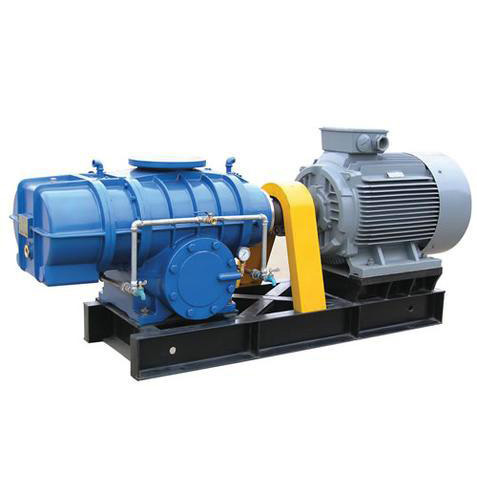
2. Mechanics of Direct-Coupled Rotary Positive Displacement
Direct Coupling Roots Blowers operate on the positive displacement principle, utilizing two or three-lobe rotors that rotate in opposite directions within a precisely machined casing. The direct coupling ensures these rotors maintain exact synchronization, driven by timing gears that prevent metal-to-metal contact. As the lobes rotate, they trap a fixed volume of air at the intake port and transport it to the discharge side, where it is expelled against system pressure.
The key mechanical advantage lies in the coupling itself. A flexible coupling, often of the taper-lock style, connects the motor shaft to the blower shaft, accommodating minor misalignments while transmitting torque efficiently. This direct drive eliminates the slippage inherent in belt systems, ensuring that the blower operates precisely at its designed speed, which directly correlates to a guaranteed volumetric flow rate. This characteristic is essential for processes requiring a consistent, metered air supply, such as in chemical dosing or fluidized bed reactors.
3. Performance Advantages Over Belt-Driven Systems
When evaluating Direct Coupling Roots Blowers against belt-driven counterparts, several performance differentiators emerge. First, the direct coupling eliminates belt tensioning and wear, which not only reduces maintenance frequency but also prevents the gradual loss of efficiency as belts stretch over time. Second, the absence of a belt and pulley assembly reduces the overall footprint and weight of the unit, simplifying installation and integration into compact plant layouts.
Furthermore, direct-drive systems exhibit lower vibration levels and operate more quietly, contributing to a safer and more comfortable working environment. The reduced mechanical complexity means fewer components are subject to failure, enhancing the overall reliability of the system. In applications where space is constrained or where continuous, high-load operation is required, direct coupling provides a decisive advantage in terms of both performance stability and lifecycle cost considerations.
| Parameter | Direct Coupling | Belt-Driven |
|---|---|---|
| Efficiency (power transmission) | High (no slip loss) | Moderate (belt slip & friction) |
| Maintenance frequency | Low (no belt replacement) | High (belt tensioning & replacement) |
| Footprint | Compact | Larger (requires pulley space) |
| Vibration & Noise | Lower | Higher |
| Speed accuracy | Precise (fixed ratio) | Variable (belt slip) |
4. Installation & Alignment: Precision for Longevity
The successful deployment of Direct Coupling Roots Blowers hinges on meticulous installation, particularly shaft alignment. Even minor misalignment can induce excessive vibration, premature bearing wear, and coupling fatigue. Industry best practices dictate that the coupling halves must be installed with an interference fit, often requiring controlled heating, to ensure a secure connection to the shafts.
Proper alignment involves checking both offset and angular deviations. For optimal service life, the total indicator reading (TIR) on the coupling hubs should not exceed 0.005 inches (0.13 mm), and the parallel deviation of coupling faces should be within 0.001 inches (0.03 mm). Additionally, it is critical to establish the correct axial gap between coupling halves to accommodate thermal expansion of the shafts during operation, preventing thrust loading that could damage the blower's internal components. Using a taper-lock style coupling is recommended to ensure positive torque transmission and ease of removal.
5. Maintenance Protocols for Direct Drive Units
While Direct Coupling Roots Blowers require less frequent intervention than belt-driven units, a structured maintenance schedule is essential. The primary focus areas include lubrication of the gearbox and bearings, coupling inspection, and verification of alignment. Regular oil changes using the manufacturer-recommended lubricant prevent gear wear and ensure smooth operation.
Periodic coupling checks should involve visual inspection for wear or cracks, and re-torquing of fasteners to specified values. Vibration monitoring can serve as a predictive maintenance tool, detecting early signs of imbalance or misalignment. Additionally, ensuring the intake air filter is clean and unobstructed will protect the rotors from particulate damage, maintaining the clean, oil-free air output that is a hallmark of these blowers.
- Daily: Check oil levels, listen for unusual noise, monitor discharge pressure & temperature.
- Monthly: Inspect coupling for wear, verify alignment, clean air filter.
- Quarterly: Change gear oil, inspect bearings, check all fasteners torque.
- Annually: Comprehensive overhaul, including rotor clearance measurement and seal replacement.
6. Critical Industrial Applications
The robust design and reliable performance of Direct Coupling Roots Blowers make them indispensable across a wide range of sectors. In wastewater treatment, they provide essential aeration for aerobic digestion, ensuring the biological breakdown of organic matter. In the aquaculture industry, they maintain critical dissolved oxygen levels in ponds and tanks, directly impacting stock health and yield.
For bulk material handling, these blowers are used in pneumatic conveying systems to transport cement, grains, plastics, and other powders through pipelines. The stable, high-pressure airflow ensures consistent and efficient material transfer over long distances. Other key applications include combustion air supply in furnaces, gas boosting in petrochemical plants, and vacuum packaging operations, demonstrating the versatility of this technology across the industrial spectrum.
Key Application Sectors: Wastewater Aeration · Aquaculture · Pneumatic Conveying · Cement Industry · Power Plants · Chemical Processing · Biogas Handling
7. Key Technical Specifications & Selection Guide
Selecting the right Direct Coupling Roots Blowers for an application requires careful analysis of flow rate, pressure, and power requirements. Typical units offer flow rates ranging from as low as 0.6 m³/min to over 120 m³/min, with discharge pressures up to 98 kPa. Motor power can span from 1.1 kW for smaller units to over 185 kW for large-scale industrial models.
When specifying a blower, consider the required differential pressure, the desired flow rate at that pressure, and the ambient operating conditions. The three-lobe rotor design has become the industry standard for its improved pulsation characteristics and efficiency compared to older two-lobe designs. Consulting performance curves and technical datasheets is crucial to ensure the selected blower operates at its optimal efficiency point, delivering reliable service for the intended application.
| Parameter | Typical Range | Notes |
|---|---|---|
| Flow Rate (Qs) | 0.6 – 120 m³/min | Dependent on speed & blower frame size |
| Discharge Pressure | 9.8 – 98 kPa | Up to 60 kPa for common applications |
| Motor Power | 1.1 – 185 kW | Directly proportional to pressure & flow |
| Rotary Speed | 980 – 1980 RPM | Fixed by motor speed (direct drive) |
| Rotor Design | Three-lobe | Standard for improved efficiency |
| Noise Level | < 85 dBA | With standard silencers |
8. Frequently Asked Questions (FAQ)
The primary benefits are enhanced reliability (no belt to wear or break), higher transmission efficiency (no slip loss), and more stable airflow, especially under varying pressure conditions. It also reduces maintenance frequency and overall operational footprint.
It is recommended to inspect the coupling visually and check for proper torque on fasteners during monthly maintenance. More comprehensive inspections, including alignment verification, should be performed quarterly or anytime after a major disturbance or maintenance event.
It means the blower moves a fixed, predetermined volume of air with each revolution of the rotors. This characteristic ensures a consistent flow rate that is largely independent of the discharge pressure, making it ideal for applications requiring stable air delivery.