Executive Summary
The Roots Vacuum Pump stands as a cornerstone technology in modern industrial processing, offering unparalleled efficiency in pneumatic conveying and vacuum packaging systems. Unlike traditional oil-sealed pumps, this mechanism operates on a dry-running principle, utilizing two figure-eight rotors that rotate in synchronization to move large volumes of air at relatively low vacuum levels. This comprehensive analysis explores the engineering behind these robust machines, their critical role in industries ranging from food packaging to cement transportation, and the technical specifications that define their performance. As a vital component in maintaining negative pressure environments, understanding the operational parameters of these pumps is essential for engineers and procurement specialists alike.
1.The Engineering Behind the Mechanism
At the heart of industrial aeration and evacuation systems lies a specific type of positive displacement pump. This device operates on a fundamentally different principle than its centrifugal counterparts. Instead of using impellers to impart velocity to a fluid, it utilizes two or three lobed rotors that spin in precise opposition within a tight tolerance housing. As these rotors turn, they create expanding volumes on the intake side, drawing in air or gas, and then compress and expel it on the discharge side. This mechanism is inherently oil-free, meaning the pumping chamber requires no lubrication, making it ideal for applications where contamination must be strictly avoided.
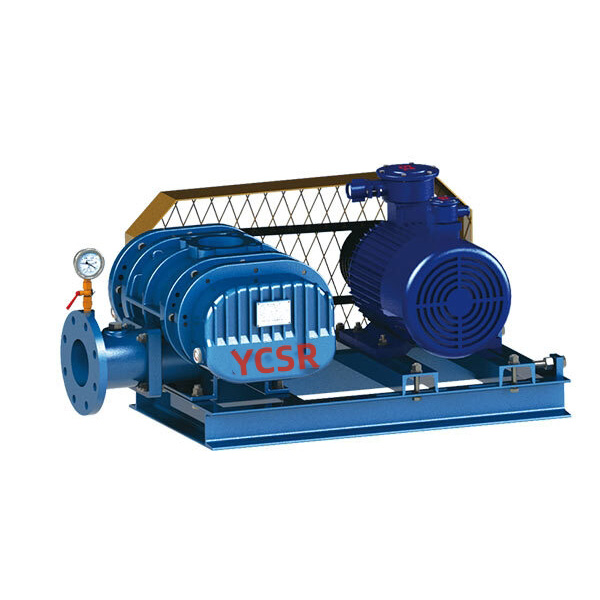
Synchronous Rotation: Precision gears maintain the exact positioning of the rotors, preventing metal-to-metal contact and ensuring longevity.
Dry Running Capability: The absence of internal lubrication in the air stream prevents product contamination, a critical feature for food and pharmaceutical processing.
High Volume Throughput: These units are designed to move large cubic meters of air per minute, making them superior for bulk handling tasks.
The design of the rotors—whether two-lobed or three-lobed—significantly impacts the noise profile and the smoothness of airflow. Three-lobed designs generally offer quieter operation and less pulsation, which is a key consideration for facilities located near residential areas or noise-sensitive environments.
2.Technical Specifications and Performance Metrics
When evaluating these systems for integration into an existing production line, specific performance metrics must be analyzed. The operational envelope of these machines is typically defined by their ability to generate negative pressure and their volumetric flow rate. For instance, industrial-grade units can achieve vacuum degrees ranging from -100mmHg to -330mmHg, with air volumes varying from 6.24m3/min to over 80m3/min. These figures are not static; they depend heavily on the configuration of the system, whether it is belt-driven for variable speed control or direct-coupled for maximum efficiency.
|
Configuration Type
|
Power Source Options
|
Typical Vacuum Range
|
Key Advantage
|
|
Belt-Connected Negative Pressure
|
Electric Motor / Variable Frequency
|
-100mmHg ~ -250mmHg
|
Adjustable speed for process control
|
|
Direct-Connected Negative Pressure
|
Electric Motor (Fixed Speed)
|
-150mmHg ~ -300mmHg
|
Higher mechanical efficiency, less maintenance
|
|
Diesel Negative Pressure
|
Internal Combustion Engine
|
-100mmHg ~ -200mmHg
|
Mobility and operation in off-grid locations
|
It is crucial to understand that the "ultimate vacuum degree" is not just a function of the pump itself but also of the entire system's integrity. Factors such as pipe diameter, filter cleanliness, and the sealing of connections all contribute to the final achievable vacuum level. Therefore, regular maintenance and system checks are mandatory to sustain peak performance.
3.Industrial Applications and Use Cases
The versatility of this technology allows it to serve two distinct yet vital sectors: consumables processing and heavy construction materials handling. In the food industry, maintaining a pristine environment is non-negotiable. Here, the machinery is employed to evacuate air from packaging, thereby extending shelf life and preserving flavor profiles. Conversely, in the cement and aggregate industry, the focus shifts to bulk transportation and environmental protection.
Food Packaging Lines: Used to create vacuum-sealed environments that inhibit bacterial growth and keep products fresh during distribution.
Cement Truck Unloading: Essential for pneumatic unloading systems, these pumps generate the suction needed to extract powder from tankers efficiently.
Wastewater Treatment: Provides aeration in treatment plants to facilitate the breakdown of organic matter by aerobic bacteria.
For cement transportation specifically, the equipment plays a dual role. It not only facilitates the rapid transfer of materials but also maintains negative pressure within the tank during unloading. This prevents dust leakage, ensuring compliance with environmental regulations and protecting the health of workers. The ability to customize these units for specific truck models and power requirements makes them indispensable in logistics.
4.Selection Criteria for Industrial Use
Choosing the right unit involves more than just matching horsepower ratings. Engineers must consider the specific demands of their application, including the required flow rate, the target vacuum level, and the operating environment. For instance, a facility requiring quiet operation might prioritize a three-lobe, low-noise constant-speed model, whereas a mobile application might necessitate a diesel-powered variant.
Key Considerations
Material Compatibility: Ensure the housing and rotor materials are suitable for the type of media being handled (e.g., corrosive gases vs. clean air).
Power Source Availability: Assess whether the site has access to three-phase electricity or if a diesel-powered unit is required for mobility.
Maintenance Accessibility: Look for designs that allow easy access to bearings and seals to minimize downtime during servicing.
Furthermore, partnering with a manufacturer that offers OEM and ODM services can provide a significant advantage. Customization allows for the integration of specific flanges, motors, and control panels that fit seamlessly into existing infrastructure. When evaluating suppliers, look for those with a proven track record in the foundry industry and those who operate their own factories to ensure quality control from casting to final assembly.
"Investing in the correct specification of equipment today prevents costly production delays tomorrow."
5.Frequently Asked Questions
What is the primary difference between a Roots blower and a traditional vacuum pump? +
The fundamental distinction lies in the operating principle and the resulting output. A traditional vacuum pump, such as a rotary vane pump, is designed to achieve very high vacuum levels (low pressure) but with a relatively low flow rate. In contrast, a Roots-type unit is a positive displacement mechanism designed for high-volume airflow at relatively low vacuum levels. It excels in moving large amounts of air quickly rather than achieving a deep vacuum.
Can this equipment be used for both suction and discharge? +
Yes, the design is symmetrical and bi-directional. While the question focuses on the vacuum application (suction), the same physical unit can often be utilized for positive pressure applications (discharge) by simply reversing the flow direction, provided the system piping is configured for it. This versatility makes it a valuable asset in facilities requiring both pneumatic conveying and evacuation.
How is the vacuum degree measured and what affects it? +
The vacuum degree is typically measured in millimeters of mercury (mmHg) or millibars (mbar). The ultimate vacuum achievable by the system is affected by several factors: the internal leakage rate of the pump, the adsorption of gases on internal surfaces, and critically, the integrity of the entire system's seals and piping. Even a small leak in the hose or connection can drastically reduce the maximum vacuum level.
6.Conclusion and Expert Recommendations
In summary, the Roots Vacuum Pump remains an indispensable tool for industries requiring high-volume air movement under negative pressure. Its robust construction, adaptability to various power sources—from electric to diesel—and its ability to integrate into both food-grade packaging lines and heavy-duty cement transporters underscore its engineering versatility. When selecting a unit, always verify the air volume requirements against the pump's rated capacity and ensure the vacuum degree meets the specific process needs.
For those seeking a reliable partner in environmental protection equipment and industrial machinery, Yinchi offers a comprehensive range of solutions tailored to global standards. With a focus on quality manufacturing and customer-specific customization, they provide the technical support necessary to optimize your industrial processes.