- English
- 简体中文
- Esperanto
- Afrikaans
- Català
- שפה עברית
- Cymraeg
- Galego
- 繁体中文
- Latviešu
- icelandic
- ייִדיש
- беларускі
- Hrvatski
- Kreyòl ayisyen
- Shqiptar
- Malti
- lugha ya Kiswahili
- አማርኛ
- Bosanski
- Frysk
- ភាសាខ្មែរ
- ქართული
- ગુજરાતી
- Hausa
- Кыргыз тили
- ಕನ್ನಡ
- Corsa
- Kurdî
- മലയാളം
- Maori
- Монгол хэл
- Hmong
- IsiXhosa
- Zulu
- Punjabi
- پښتو
- Chichewa
- Samoa
- Sesotho
- සිංහල
- Gàidhlig
- Cebuano
- Somali
- Тоҷикӣ
- O'zbek
- Hawaiian
- سنڌي
- Shinra
- Հայերեն
- Igbo
- Sundanese
- Lëtzebuergesch
- Malagasy
- Yoruba
- Español
- Português
- русский
- Français
- 日本語
- Deutsch
- tiếng Việt
- Italiano
- Nederlands
- ภาษาไทย
- Polski
- 한국어
- Svenska
- magyar
- Malay
- বাংলা ভাষার
- Dansk
- Suomi
- हिन्दी
- Pilipino
- Türkçe
- Gaeilge
- العربية
- Indonesia
- Norsk
- تمل
- český
- ελληνικά
- український
- Javanese
- فارسی
- தமிழ்
- తెలుగు
- नेपाली
- Burmese
- български
- ລາວ
- Latine
- Қазақша
- Euskal
- Azərbaycan
- Slovenský jazyk
- Македонски
- Lietuvos
- Eesti Keel
- Română
- Slovenski
- मराठी
- Srpski језик

How Can a Dense Type Roots Blower Cut Downtime in Pneumatic Conveying Systems?
Article Abstract
A Dense Type Roots Blower is often chosen when plants need stable airflow, compact installation, and predictable maintenance in applications like pneumatic conveying, aeration, powder transfer, and dust collection support. Yet many buyers still struggle with the same pain points—unexpected shutdowns, pressure swings, excessive noise, hot running temperatures, and fast-wearing filters and seals. This article breaks down what “dense type” typically implies in real-world installation, how to size and specify a blower package without guesswork, what to inspect to prevent failures, and how to compare options using a practical checklist. You’ll also find a selection table, commissioning steps, maintenance routines, and a focused FAQ to help you make a confident purchasing decision.
Table of Contents
- Outline
- What Is a Dense Type Roots Blower?
- The Most Common Customer Pain Points (and Why They Happen)
- How to Select the Right Unit Without Overpaying
- Specification Checklist You Can Copy-Paste
- Installation and Commissioning Steps That Prevent Early Failures
- Maintenance Routine for Reliability
- Fast Troubleshooting Guide
- FAQ
- Next Step
Outline
- Define what “dense type” typically means for Roots blower packaging and field use
- Map real operational problems to root causes (filtering, sizing, heat, pulsation, alignment)
- Provide a practical selection table and a clear specification checklist
- Share commissioning and maintenance steps that reduce downtime
- Answer common buyer questions in a straightforward FAQ
What Is a Dense Type Roots Blower?
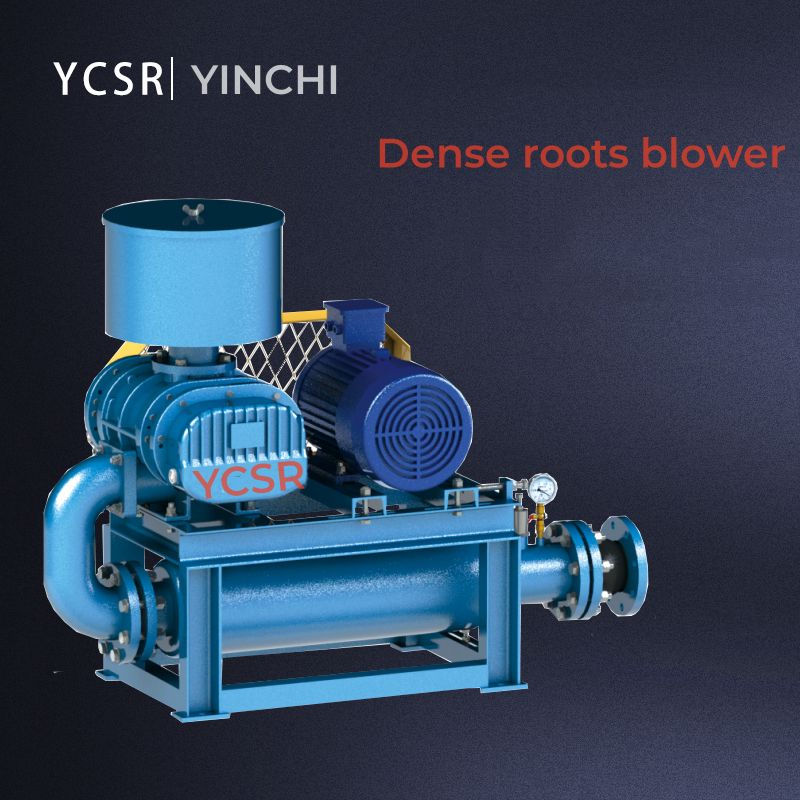
A Roots blower is a positive-displacement machine designed to move a relatively constant volume of air per revolution. In plain terms, it is great at delivering stable airflow, but it does not “create pressure” the way a compressor does—pressure is a result of system resistance (piping, filters, valves, silos, diffusers, and process backpressure).
When buyers say Dense Type Roots Blower, they usually mean a compact, integrated configuration engineered to be easier to install and more “plant-friendly”:
- Dense packaging with a rigid base and well-arranged piping to reduce footprint
- Integrated accessories such as inlet filtration, silencers, check/relief protection, and flexible connectors
- Maintenance-accessible layout so filters, belts/couplings, and lubrication points are reachable without disassembling half the skid
- Better vibration and noise control through thoughtful mounting and acoustic elements
In many plants, the “dense type” choice is less about the blower principle and more about reducing site work: fewer surprises at commissioning, fewer custom brackets, and fewer days lost to chasing leaks and misalignment.
The Most Common Customer Pain Points (and Why They Happen)
If you’ve ever felt like blowers are “simple machines that still cause complex headaches,” you’re not imagining it. Downtime almost always comes from a small set of repeatable issues:
-
Pressure swings that trip protection devices
Usually caused by unstable process demand, undersized piping, rapidly clogging filters, or an incorrectly set relief valve. A Dense Type Roots Blower can be reliable, but it cannot compensate for a system that’s choking itself. -
Filters clogging too fast
In dusty environments, a weak inlet filtration strategy is a downtime factory. Fine powders can load filters rapidly, raising inlet losses, elevating discharge temperature, and increasing power draw—until something trips. -
Excessive noise and vibration
Roots blowers naturally generate pulsation. If silencers, flexible joints, base stiffness, and piping supports aren’t treated as a system, noise becomes a daily complaint and vibration becomes a bearing/seal problem later. -
Hot running temperatures
Heat climbs with higher differential pressure, poor ventilation, dirty filters, and incorrect clearances. Over time, heat accelerates oil degradation and can reduce seal life. -
Oil leaks and premature bearing issues
Often traced to misalignment, over-tensioned belts, poor foundation flatness, or neglected lubrication intervals. Not glamorous, but brutally common. -
“It worked in the test bay but fails on site”
This is usually an installation and commissioning problem: wrong rotation, blocked inlet, inadequate electrical protection settings, poor piping layout, or missing warm-up checks.
The good news is that most of these failures are preventable with correct sizing, realistic specification, and a commissioning routine that is designed for your environment—not a generic checklist.
How to Select the Right Unit Without Overpaying
Selection should start with the process, not the catalog. Before you compare models, answer these operational questions:
- What flow range do you need (minimum, normal, peak)?
- What is the expected differential pressure in real operation, including filter loading and worst-case line conditions?
- Is the duty continuous (24/7) or intermittent?
- What is the environment—dusty, humid, corrosive, hot, or outdoor?
- How sensitive is the site to noise?
- Do you need fixed speed, or would a variable speed drive help match demand and reduce energy waste?
Then use a simple comparison approach: you’re not buying “the biggest blower,” you’re buying the most stable operating window. A well-sized Dense Type Roots Blower runs cooler, trips less, and typically costs less over its life—even if the purchase price is slightly higher.
| Decision Factor | What to Look For | Why It Matters |
|---|---|---|
| Stable airflow at your working pressure | Performance curve that covers normal + worst-case conditions | Avoids overheating and nuisance trips |
| Dust management | Appropriate inlet filter grade and service accessibility | Reduces rapid clogging and protects internals |
| Protection devices | Relief valve sizing/setting, check valve, temperature monitoring options | Prevents catastrophic failures during upsets |
| Noise control | Inlet/outlet silencers and vibration isolation strategy | Improves workplace comfort and reduces vibration-related wear |
| Ease of maintenance | Layout that allows fast filter and oil service | Less downtime, fewer skipped tasks |
| Energy and controllability | Option for variable speed operation and proper motor sizing | Matches demand, reduces wasted power |
Specification Checklist You Can Copy-Paste
If you send inquiries to multiple suppliers, you’ll get better quotes (and fewer misunderstandings) with a consistent spec. Here’s a buyer-friendly checklist:
- Application: (pneumatic conveying / aeration / vacuum assistance / other)
- Medium: clean air / dusty air / humid air (describe dust type and approximate loading if known)
- Required flow: min / normal / max (include units)
- Differential pressure: normal + worst-case (include allowances for filter loading)
- Operating pattern: continuous hours per day, starts per hour
- Site conditions: ambient temperature range, indoor/outdoor, altitude
- Power supply: voltage, frequency, wiring constraints
- Noise expectation: any dB target or “as low as practical” requirement
- Controls: fixed speed or variable speed; any PLC/IO needs
- Accessories: filtration grade, silencers, check valve, relief valve, flexible joints, base/skid
- Compliance needs: any local safety or hazardous-area considerations (if applicable)
- Spare parts preference: filter elements, seals, bearings, belts/couplings
If you want a supplier to take ownership of reliability, ask them to state the expected operating temperature range and the recommended protection settings for your duty cycle.
Installation and Commissioning Steps That Prevent Early Failures
Many early blower problems are self-inflicted. These steps are simple, but skipping them is expensive:
- Foundation and leveling: Ensure the base sits flat and is properly anchored. A twisted base can create alignment and vibration issues that show up weeks later.
- Piping stress check: Piping should not “pull” on the blower ports. Use flexible connectors appropriately and support long runs.
- Verify rotation direction: Wrong rotation can destroy performance and rapidly overheat the machine.
- Inlet cleanliness: Confirm filters are installed correctly and that the inlet path is unobstructed (yes, even packaging debris happens).
- Relief valve readiness: Confirm the relief valve is installed and set for your system, not a generic placeholder value.
- Initial run-in: Start at no-load/low-load if possible, then gradually approach operating conditions while monitoring temperature, vibration, and pressure.
- First-hour inspection: Re-check fasteners, belts/couplings, and any signs of leaks. Small fixes here prevent big failures later.
A properly packaged Dense Type Roots Blower helps because the accessory arrangement is usually more standardized and repeatable, which reduces installation variability across sites.
Maintenance Routine for Reliability
Reliability is mostly routine. A practical schedule looks like this (adjust to your duty and environment):
- Daily/shift: record pressure, temperature, and abnormal noise; quick visual check for oil leakage and loose fittings
- Weekly: inspect inlet filter condition; check belt/coupling area; verify vibration feels “normal”
- Monthly: confirm relief valve and check valve are functioning; check electrical connections and protective settings
- Quarterly: oil condition check (or change per supplier guidance); inspect flexible joints and piping supports
- Annually: deeper inspection of bearings, seals, and alignment; replace wear items proactively if your process is harsh
If your site is dusty, your filter strategy is your uptime strategy. Consider keeping spare filter elements on-hand and standardizing them across lines to avoid “wrong filter, right day, wrong outcome” situations.
Fast Troubleshooting Guide
- Low airflow: check clogged inlet filter, blocked inlet, wrong rotation, excessive system restriction
- High temperature: check differential pressure, dirty filters, insufficient ventilation, relief valve setting, overloading
- Loud pulsation/noise: confirm silencers are installed correctly, check piping supports and resonance, verify flexible connectors
- Oil leakage: inspect seals, breathers, overfilling, and alignment; verify vibration levels
- Frequent trips: confirm motor protection settings match the actual load; check for pressure spikes from process valves or line blockages
FAQ
Q: When is a Dense Type Roots Blower a better choice than a standard open-frame setup?
A: When you want faster installation, a smaller footprint, and more consistent site-to-site performance. Integrated accessories and a rigid base reduce the “field engineering” burden and often reduce early commissioning problems.
Q: Can a Roots blower handle dusty air without constant failures?
A: Yes—if filtration is properly selected and maintained, and if the inlet is positioned to reduce dust ingestion. Many failures blamed on the blower are actually filtration and housekeeping issues.
Q: Why do pressure readings look stable but the blower still overheats?
A: Overheating can come from hidden restrictions (filter loading, undersized piping, partially closed valves), insufficient cooling/ventilation, or operating too close to the edge of the safe working range.
Q: Should I choose fixed speed or variable speed?
A: If demand varies, variable speed can reduce energy waste and improve control. If demand is steady and the process is simple, fixed speed may be adequate and cost-effective.
Q: What information should I provide to get an accurate quotation?
A: Flow range, realistic differential pressure (including worst-case), duty cycle, site conditions, dust/humidity details, power supply, and any noise constraints. The checklist in this article is a good template.
Q: Do I really need a relief valve if the system “usually runs fine”?
A: You want protection for the day it doesn’t run fine—filter collapse, valve mistakes, line blockages, and process upsets happen. Proper protection helps prevent severe damage.
Next Step
If you’re selecting a Dense Type Roots Blower for conveying, aeration, or other industrial airflow duties, the fastest path to reliable operation is a clear spec, correct sizing for real-world restrictions, and a commissioning routine that treats piping, filtration, and protection devices as part of one system.
For buyers who want a packaged solution and support through selection and commissioning, Shandong Yinchi Environmental Protection Equipment Co., Ltd. provides dense-type blower solutions designed for practical installation and long-term serviceability. If you share your flow range, operating pressure window, and site conditions, you can quickly narrow down a stable configuration—then spend less time troubleshooting and more time running production.
Ready to reduce downtime and stabilize your airflow? Send your operating requirements and application details—contact us to get a tailored recommendation and a clear configuration list for your project.